
Dr Ahsan Adeel
Director, Conscious Multisensory
Integration (CMI) Lab | Fellow, Howard Brain Sciences Foundation
| Former Fellow, MIT Synthetic Intelligence & Oxford Computational
Neuroscience Lab | Associate Professor of Cellular AI,
University of Stirling.
As an R&D Creator in the ARIA’s Nature Computes Better opportunity space I am looking to develop a new form of AI chip that is economical and, when guided by its owners’ needs and values, will empower individuals to make more informed judgements. This project, titled TREND, is funded by the Advanced Research + Invention Agency (ARIA) at the University of Stirling.
My research focuses on understanding the cellular foundations of human thought, specifically common sense, rationality, and imaginative thinking—key attributes that have made humans one of the most complex and adaptable species.
My
latest
thesis [Link]
explores some of these fundamental questions, aiming to bridge the gap between the brain and the mind by drawing on recent breakthroughs in cellular neurobiology and computational neuroscience. Because future powerful AI without fundamental human values could do more harm than good.
But can these cellular mechanisms be replicated in machines? If so, could future machines uncover new dimensions of human consciousness and our deep connection to nature and creation that we haven’t even begun to comprehend?
Could future AI not only assist humanity but also elevate it—enhancing our common sense, rationality, and even moral values?
Such advancements could reshape society in extraordinary ways, perhaps even paving the way for a new era of peace and collective human prosperity. And as humanity ventures further into space exploration, could these intelligent machines one day enable us to govern interstellar colonies?
If machines could truly think and imagine like us, what would life look like? Would they redefine personal growth, transform communities, and even restructure entire civilizations? Or is this vision simply an unattainable dream?
My
ambitions
are
fueled by our latest research findings (2024a
[Link], 2024b
[Link], 2023 [Link], 2022a [Link], 2022b [Link],
2018 [Link]), which offer fundamental insights into the mechanisms of
pyramidal
Two-Point Neurons (TPNs) in the mammalian neocortex—suggested as the hallmarks
of
conscious processing [Link],
with their dysfunction linked to intellectual learning disabilities [Link].
Latest research also highlights the role of TPNs in mental states, including
wakefulness, deep sleep, dreaming, and wakeful thoughts and imagery (Cellular
Psychology, W.A. Phillips, Trends in Cognitive Sciences, in press).
My
findings
support the hypothesis that the processing and learning capabilities of TPNs are
essential to the mammalian neocortex and may overcome the computational
limitations
of
current AI. I call this revolution occurring in the sciences of brain,
mind,
and
AI, The Beginning of Real Understanding (BRU), beyond AI.
Check
out
the
latest multi-scale perspective from the flagship €1.2 billion Human Brain
Project
(HBP) [Link], our work is
highlighted
as a notable contribution. Additionally, see the recent review by P. Poirazi and
her
team [Link],
which recognizes our research as of ‘outstanding interest’ in the field of
next-generation neuromorphic computing. Our work is also prominently featured in
the
first book on two-point neurons [Link]
by Prof. W.A. Phillips, published by Oxford University Press in March 2023.
Our
contribution to this rapidly growing area of cellular neurobiology is
encouraging AI
experts to incorporate TPNs into state-of-the-art AI models for applications
where
speed
and energy efficiency are crucial. It is also inspiring neurobiologists to
explore
the
fine-tunings required to harness this neurobiological mechanism for solving
complex
real-world problems.
I am involved in various academic and government projects of
significant
magnitude, addressing the pressing need for secure, environmentally viable,
economical,
and resilient AI solutions for the success of emerging technologies in health
care,
space, underwater, robotics, autonomous cars, and manufacturing. My concept of
5G-IoT
enabled MS hearing aids (HAs) was ranked second in the EPSRC’s healthcare
technologies
grand challenge of frontiers of physical intervention (EP/T021063/1). The team
was
awarded a £4 million EPSRC transformative healthcare technologies programme
grant in
2020. Other projects include, new
AI
chips for future Mars rovers to go farther, faster, and do more science;
biologically plausible models to understand the cellular foundations of conscious experience, anaesthesia,
dreaming, hallucinations, autism, and other neurological and developmental
disorders.
I hold a B.Eng. in Electrical Engineering, an MSc in Electronics, and a PhD in Cognitive Computing. I have served as a visiting EPSRC/MRC Research Fellow at the University of Stirling and as a Fellow at the MIT Synthetic Intelligence Lab, the Oxford Computational Neuroscience Lab, and the Howard Brain Sciences Foundation. Currently, I am an Associate Professor of Cellular AI and Theoretical Neuroscience at the University of Stirling.
Cognitively-inspired multimodal (MM) hearing-aid:
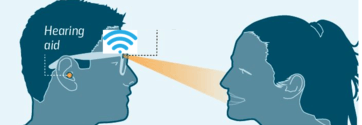
Developing the world’s first biologically plausible multisensory hearing aid
that
uses
video information from lip movements to selectively amplify speech signals
heard in
noisy environments. It has been shown to be able to remove background noise
so well
that
it can generate speech output in a noisy environment that is as clear as in
a
noiseless
environment. Thus, it is now possible to offer people with impaired hearing
intelligent
lip-reading hearing aids that will make it far easier for them to perceive
speech.
Conscious multisensory integration:
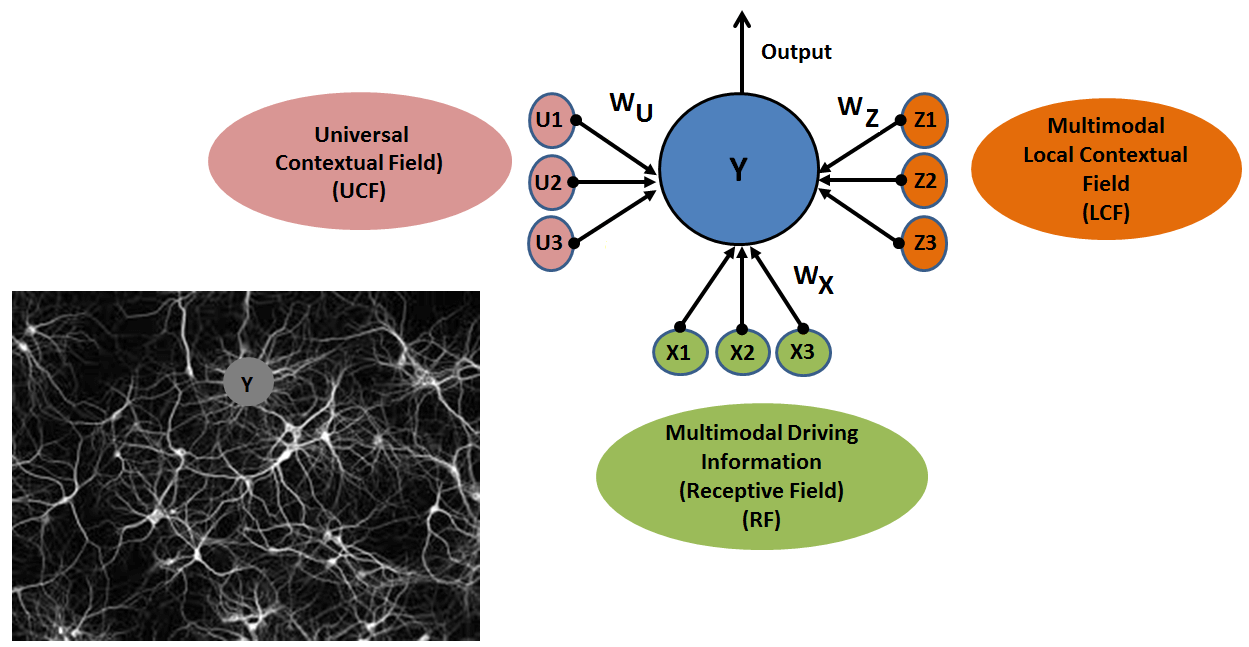
Developing a novel theory on conscious multisensory integration (CMI),
which, as
opposed
to unconditional excitatory and inhibitory activity in existing deep neural
networks
(DNNs), supports conditional amplification/suppression of feedforward
signals,
with
respect to external environment.
The theory sheds light on some crucial neuroscience questions, including:
How
does
the
brain integrate the incoming multisensory signals with respect to different
external
environments? How are the roles of these multisensory signals defined to
adhere
to
the
anticipated behavioural-constraint of the environment?
Understanding information decomposition in conscious multisensory
integration:
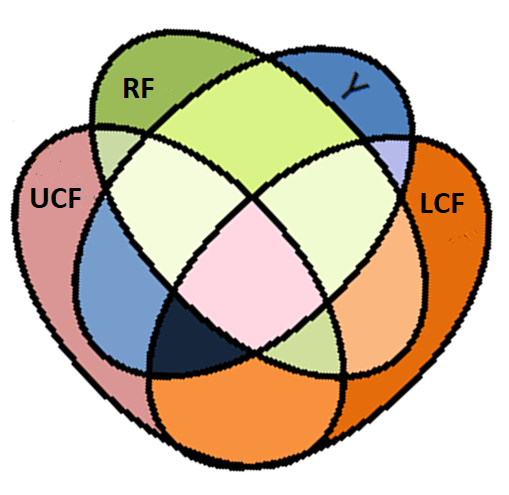
This work aims to further understand the information decomposition in
conscious
multisensory integration. Specifically, we are quantifying the suppression
and
attenuation of multisensory (AV) signals in terms of four basic arithmetic
operators
(addition, subtraction, multiplication and division) and their various
forms.
The
aim is
to analyze how the information is decomposed into components unique to each
other
having
multiway mutual/shared information in a CMI model.
Computational modelling of biological audio-visual processing in
Alzheimer’s
and
Parkinson’s diseases using conscious multisensory integration:
Sensory
impairments have an enormous impact on our lives and are closely linked to
cognitive
functioning.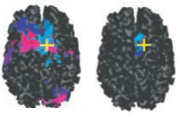 Neurodegenerative processes in AD and PD affect the structure
and
functioning of neurons, resulting in altered neuronal activity. For example,
patients
with AD suffer from sensory impairment and lack the ability to channelize
awareness.
However, the cellular and neuronal circuit mechanisms underlying this
disruption
are
elusive. Therefore, it is important to understand how multisensory
integration
changes
in AD/PD, and why patients fail to guide their actions. This project aims to
further
extend the existing preliminary CMI research to understand how the roles of
audio
and
visual cues change with respect to the outside world in patients with
neurodegenerative
diseases (e.g. AD/PD).
Explainable artificial intelligence:

Undoubtedly, existing AI and deep learning
systems exhibit impressive performance and effectuate tasks that are
normally
performed by humans. Yet, these end-to-end multimodal AI models operate at
the
network level and fail to justify reasoning with limited generalization and
real-time
analytics; thereby, restricting their application in areas where outcomes
have
an
impact on humans. On the other hand, humans can extrapolate from a small
number
of examples, and are quick to learn and generalize lessons learned in one
situation
to instances that occur in different contexts. In this work, we are using
CMI
and
advances in information decomposition to address the aforementioned problems
and develop XAI algorithms.
Low-power neuromorphic chips:
This research work aims to develop energy
efficient (low-power) neuromorphic chips and IoT sensors by exploiting the
controlled
firing property of the CMI theory. The CMI model inherently leverages the
complementary
strengths of incoming multisensory signals
with respect to the outside environment and anticipated behaviour.
EPSRC funded project: Towards flexible electronic hearing aid (HA)
implementations
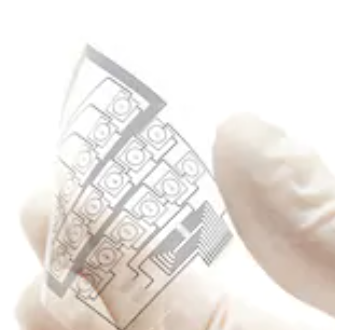
In collaboration with the University of Manchester , we are
creating an
audio-visual (AV) HA
platform based upon flexible electronics, which are now being made as
“temporary
tattoos” for improved discreteness and social acceptability.
.
EPSRC funded project: On-chip big data processing
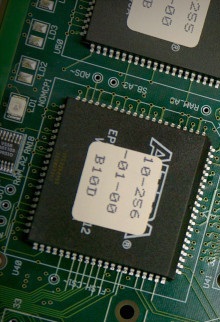
In collaboration with the University of Manchester, Alpha Data, and
ENU
, we are implementing deep cognitive neural network (DCNN) features
for
autonomous, privacy-preserving transfer learning (TL). Preliminary work has
demonstrated
such DCNN architectures are capable of highly energy-efficient, on-chip
implementations,
with fast decision-making, excellent generalization, and large gains
per-operation
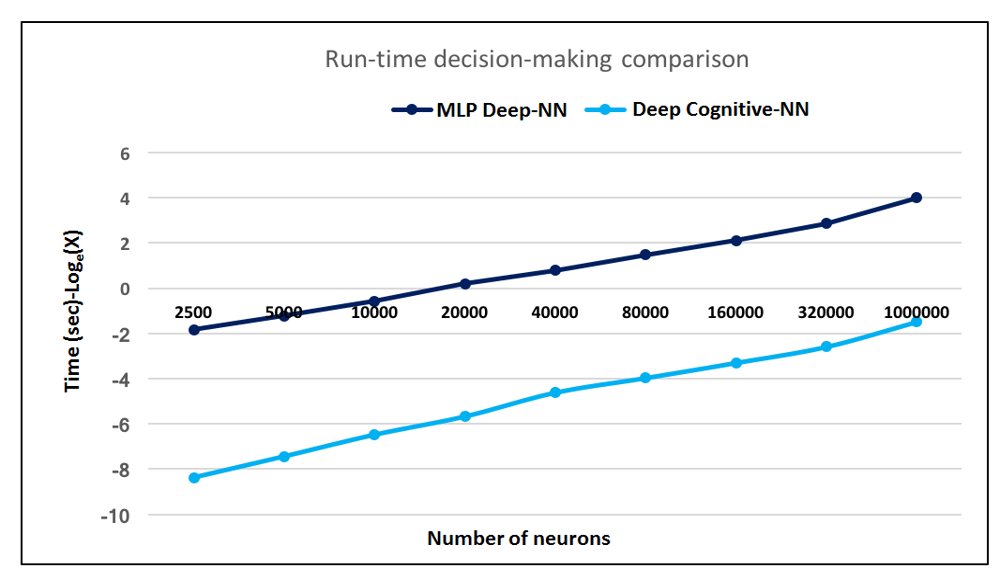
scaling with deep structures for large scale processing. For very
large-scale
simulations, comprising 1M neurons and 2.5B synapses, have demonstrated up
to
300X
faster decision-making compared to DNNs.
.
EPSRC funded project: Privacy-preserving, multimodal (MM) lip-reading
(LR)
In collaboration with the University of Glasgow , we are
exploring
the
groundbreaking technology of ambient radio frequency (RF), for lip-reading.
EPSRC funded project: deep transfer learning (TL)
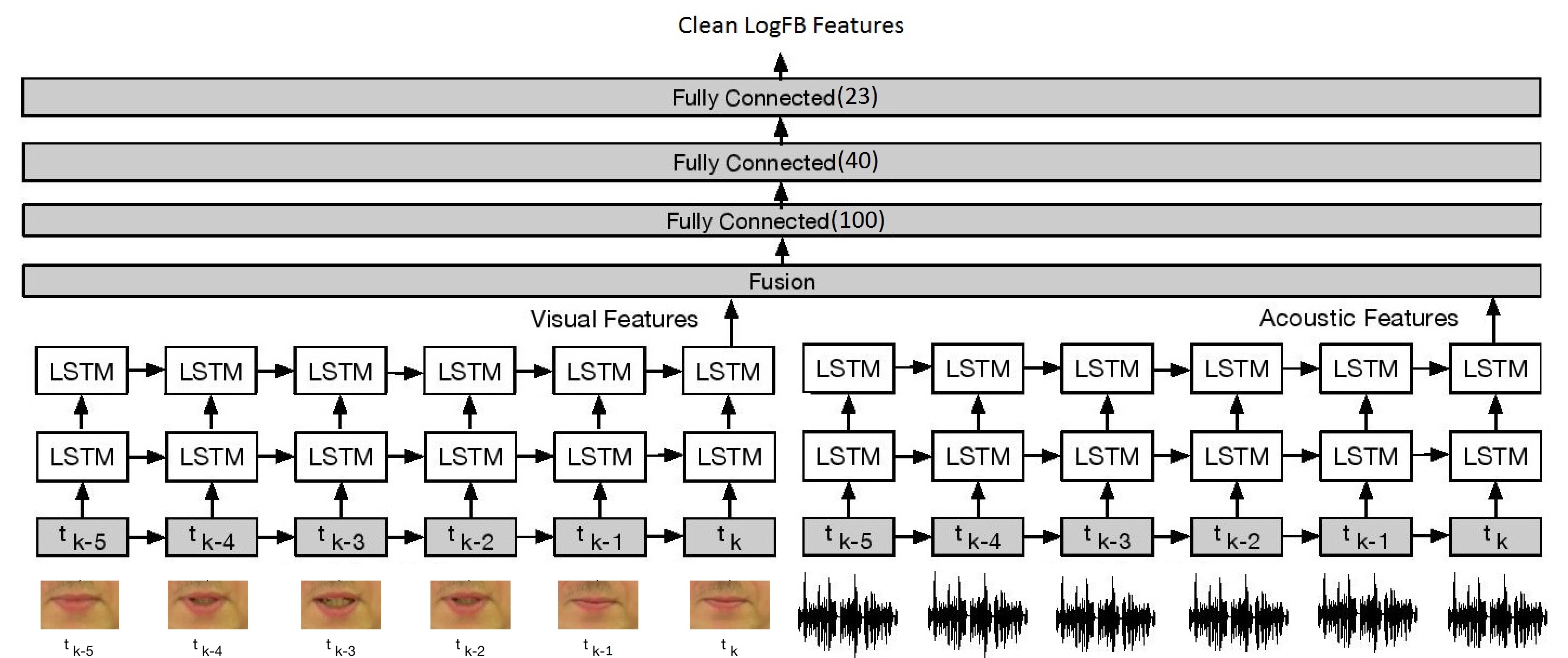
In collaboration with the University of Edinburgh and ENU ,
we
are
developing deep TL based generalized audio-visual (AV) speech enhancement
(SE)
algorithms. We are further building our innovative, context-aware DNN based
AV
mask
estimation and SE filtering models, including through top-down models of
speech,
inspired by human cognition and evolution.
Hearing Loss Testing:
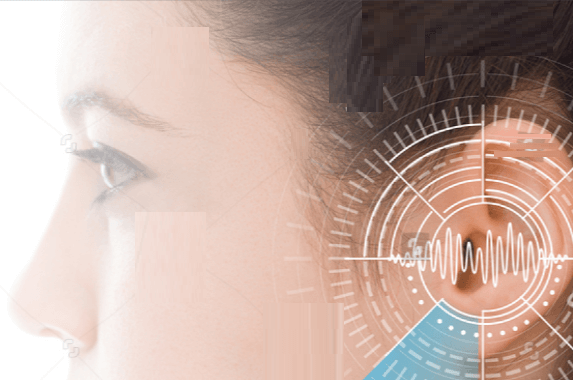
In collaboration with Princeton University, New
Jersey and the National University of Computer and Emerging
Sciences,
we
are developing an automated cost-effective pre-screening test to
predict hearing loss at an early stage. The device
can potentially offer a second opinion to audiologists and can also be
utilized
in
developing countries or rural areas where there is a lack of well-educated
audiologists.
Dementia Sensitive Personalized Environment Planner App:

With the support of
Dementia Services Development Centre at the University of
Stirling,
we
are
empowering people with cognitive impairments (e.g. dementia, autism, major
depressive disorder) to proactively choose their personalized surrounding
environment using a 5G small cell technology driven proactive environment
planner
app.
Embedded Security for IoT:

Developing a pioneering technology that is capable of providing on- chip low
power
intrusion detection and encryption in embedded and multi-core
computing systems. These represent a cost-effective alternative, and a
comparatively superior approach to state-of-the-art ARM (Arm Cortex-A,
Cortex-
M23, and Cortex-M33) processors – TrustZone
http://arm.com/products/processors/technologies/trustzone and Intel’s work
(https://software.intel.com/en-us/articles/intel-virtualization-technology-for-directed-
io-vt-d-enhancing-intel-platforms-for-efficient-virtualization-of-io-devices).
IoT sensors: In collaboration with the National University
of
Science
and Technology, we are developing a new IoT standard, DeepNode. DeepNode
stands
as a
major enabler for future smart cities, healthcare and industrial monitoring,
and
environmental/earth (remote) sensing. The DeepNodeWAN is capable of
processing
a large amount of sensitive data quickly with low power consumption and high
throughput, complying with the intelligent secure RRM and diverse
communication
requirements in massive real-time communication domains.
AV Ear Defenders – SE Application in Navy and Military:

Collaboration with the University of Texas at
Dallas to explore and exploit the potential of our develop AV
speech
enhancement
technology in the US Navy (for people controlling aircraft carriers deck
operations),
US military (for officers not wearing earplugs), air traffic control towers
(to
improve
communication and reduce the risk of accidents), and cargo trains (to
address
driver
distraction).
Disaster Management:
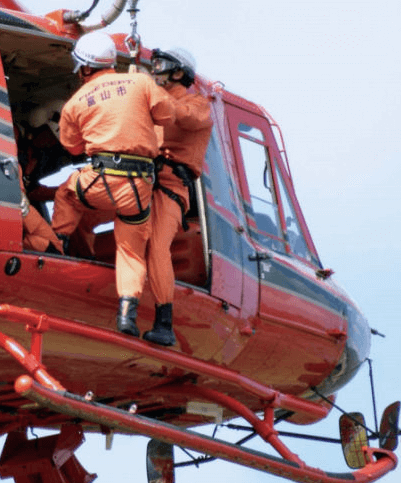
Collaboration with the Tianjin University of Technology to
explore the application of our disruptive multimodal speech processing
technology in
extremely noisy environments e.g. in situations where ear defenders are
worn,
such
as emergency and disaster response and battlefield environments.
Asthma:

Collaboration with the Edinburgh Medical School to
understand
the
role
of
exogenous sex steroid hormones in female patients with asthma. Specifically,
we are finding the correlation between the use of hormonal contraceptives
and
asthma exacerbations in reproductive age females.
Multiphase Flow Meter Calibration:
A novel deep learning driven time-series
predictive and optimization model for uncertainty growth prediction and
calibration
intervals optimization. The technology addresses the limitations of
state-of-the-art
mathematical/statistical uncertainty growth and calibration intervals
predictive
methods such as limited modelling assumptions, limited learning, lack of
ability
to
deal with non-linear complex behaviours, and poor scalability.
State-of-the-art
literature reveals that it is difficult to solve the calibration
optimization
equation
in
closed form.
Collision Free Wi-Fi routing:
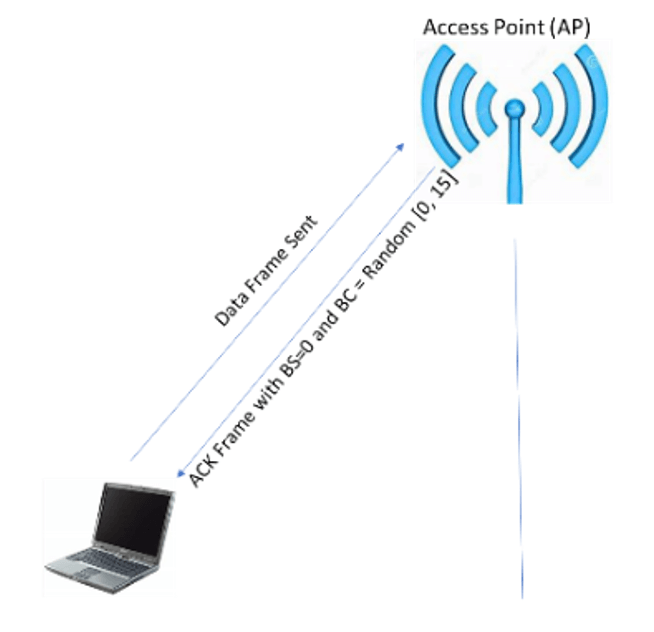
A novel deep learning driven collision free Wi-Fi
routing algorithm to enable larger number of nodes in smart cities. Social
and
digital
infrastructure of a IoT-based smart city could be boosted by deploying
high-density
public WiFi. Indeed, WiFi is a key to smart cities. Existing Wi-Fi devices
operate
following the 802.11 standards with the aim to fairly use the channel that
the
devices
share. However, the throughput performance of the existing Wi-Fi networks
suffers
from high packet loss and supports very limited number of nodes with low
datarate.
Acute general hospital admission: Collaboration with the
Dementia
Services
Development Centre at the University of Stirling, we are helping
policymakers to
explore predictors of good/bad outcome following acute general hospital
admission
for people with cognitive impairment.
Keynotes/Research
Visits
(2017 onward)
Local organizing committee chair, IEEE World Congress on
Computational
Intelligence (IEEE WCCI) 2020, 19 – 24th July, 2020, Glasgow (UK)
Keynote speaker at the National Pattern Recognition Laboratory,
Chinese
Academy
of Sciences, Beijing, Oct 19th 2019. Talk on Conscious Multisensory Integration
Invited talk on AV speech processing, School of Computing Sciences,
University of
East Anglia, January, 2019
Invited talk on multisensory integration and its application to
low-power
neuromorphic
chips, School of Computer Science, University of Manchester, Feb 2019
Invited talk on Accurate Model Of The Retinal Response, at the
Computational
Neuroscience and Cognitive Robotics Centre, Nottingham Trent University, March
2019
Invited visit to UTD for exploitation of our develop AV speech
enhancement
technology in the US Navy, Jan 2018
Invited visit to MIT for the development of a novel highly energy
efficient,
Deep
Cognitive Neural Network (DCNN) for cognitive IoT devices and neuromorphic chips,
Dec 2017
Invited visit to Harvard for possible collaboration on skin based
flexible
electronics
development, Dec 2017
Invited speaker at SICSA Conference on Big Data Science Innovations:
Prospects in
Smart Cities, Media and Governance, Nov, 2016
Invited talk on contextual audio-visual processing, Computing
Science
and
Maths
Seminars, University of Stirling, January, 2019
Keynote on AI application to geological disaster management, Harbin
Institute of
Technology, Harbin, China, British Council-China initiative, supported by Newton
Fund Researcher Links, April 2017
Keynote speaker, Suzhou University of Science and Technology, China,
April
2018
Keynote invitation, Fifth International Conference on Biosignals,
Images
and
Instrumentation ICBSII 2019, SSN College of Engineering, Chennai, Tamil Nadu, 14-
15th March 2019
Keynote invitation, 2nd World Congress on Mechanical and
Mechatronics
Engineering (WCMME-2019), April 15-16, 2019 at Dubai, UAE
GCU guest speaker, RiSE 2nd Conference, School of Engineering and
Built
Environment, Glasgow Caledonian University, June 2018
Keynote, Workshop on Big Data-driven Condition-monitoring and
Signal-processing
with Applications to the Oil & Gas Industry, Glasgow Caledonian University, June
2017
Talk at the Medical Research Council Network Meeting for
Hearing-Impaired
Listeners, Stirling, May, 2018
Invited visit to Edinburgh School of Art, ESRC Charter house
Project,
Oct
2017
Invited visit to Edinburgh medical school, meeting on OPCRD Sex
Hormones
&
Asthma, Nov, 2017
Invited talk, lip-reading driven hearing-aid technology, Stockholm
University,
Sweden, Sept, 2017
Invited talk at the University of Oxford, AI based automated liver
cancer
diagnosis,
July, 2017
Talk at the Medical Research Council Network Meeting for
Hearing-Impaired
Listeners, MRC Cardiff, July 2017
Invited visit to the the Scottish Dementia Research Consortium
Event,
Dundee, 20th
April, 2017
Workshop chair, IEEE Symposium Series on Computational Intelligence
(SSCI),
SSCI 2017), Dec 2017
Invited visit, Dementia Design App, University of Stirling, External
Advisory Board
Meeting, Sept 2017
Invited visit, GCRF, SDG6 (Water and Sanitation) Stirling Meeting,
September. 2017
Interactive Prototype Demo
Next-generation Lip-Reading Hearing Aids: Exploiting the power of contextual
Big
Data
analytics
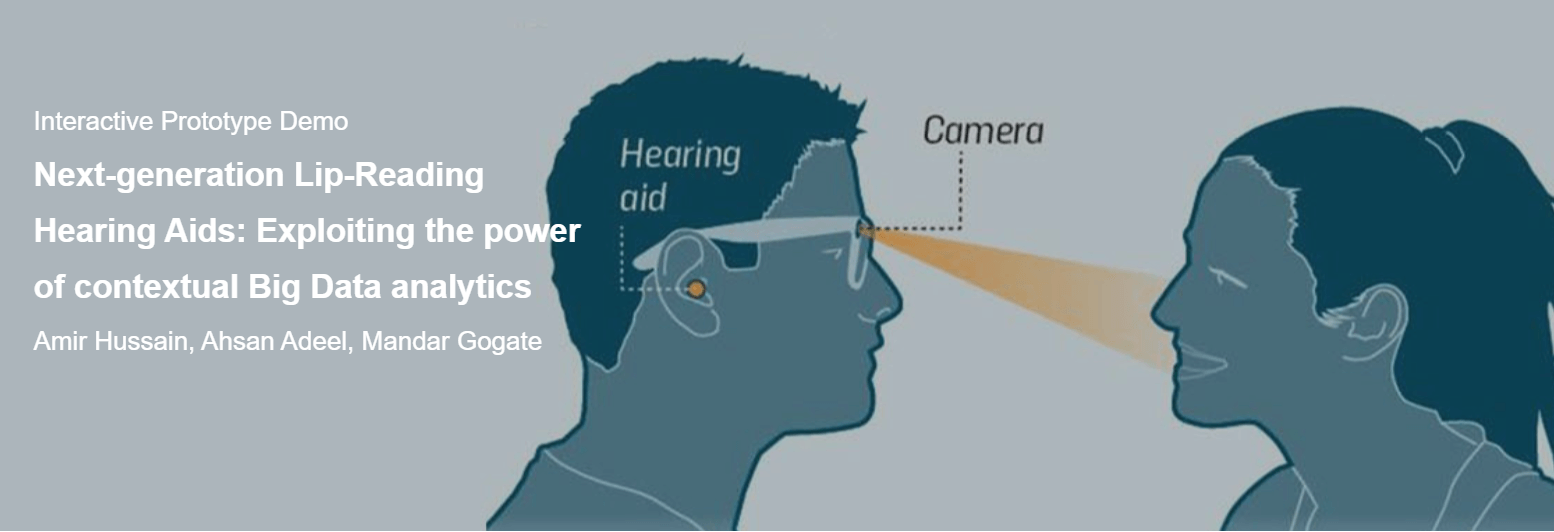
– CochleaNet: A Robust Language-independent Audio-Visual Model for
Speech Enhancement https://cochleanet.github.io/:
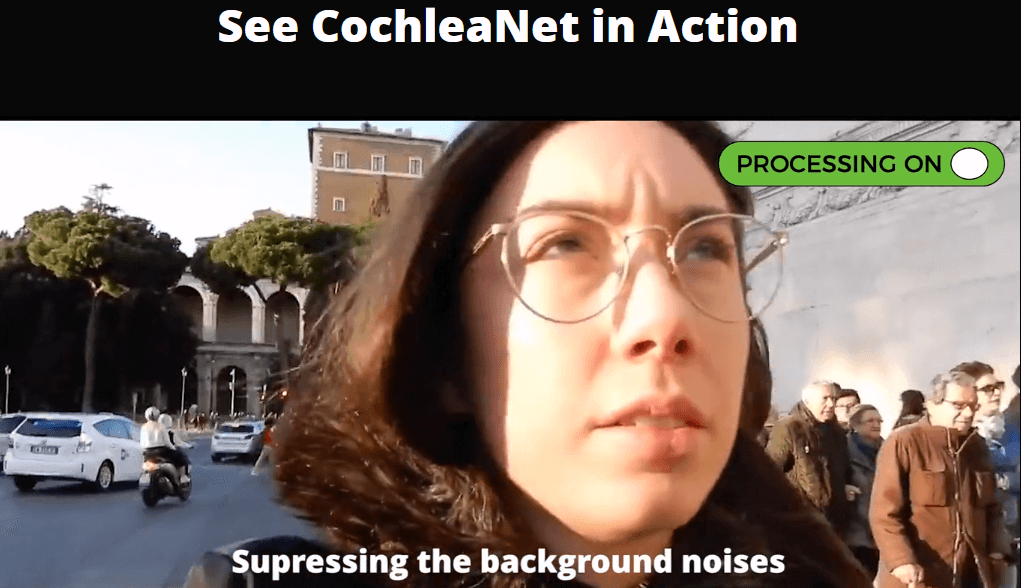
Noisy situations
cause huge problems for suffers of hearing loss as hearing aids often make
the signal more audible but do not always restore the intelligibility. In
noisy
settings, humans routinely exploit the audio-visual (AV) nature of the
speech
to selectively suppress the background noise and to focus on the target
speaker. In this paper, we present a causal, language, noise and speaker
independent AV deep neural network (DNN) architecture for speech
enhancement (SE). The model exploits the noisy acoustic cues and noise
robust visual cues to focus on the desired speaker and improve the speech
intelligibility. To evaluate the proposed SE framework a first of its kind
AV
binaural speech corpus, called ASPIRE, is recorded in real noisy
environments including cafeteria and restaurant. We demonstrate superior
performance of our approach in terms of objective measures and subjective
listening tests over the state-of-the-art SE approaches as well as recent
DNN
based SE models. In addition, our work challenges a popular belief that a
scarcity of multi-language large vocabulary AV corpus and wide variety of
noises is a major bottleneck to build a robust language, speaker and noise
independent SE systems. We show that a model trained on synthetic mixture
of Grid corpus (with 33 speakers and a small English vocabulary) and ChiME
3 Noises (consisting of only bus, pedestrian, cafeteria, and street noises)
generalise well not only on large vocabulary corpora but also on completely
unrelated languages (such as Mandarin), wide variety of speakers and noises.
– CHiME3 AV Corpus https://cogbid.github.io/chime3av/#about:
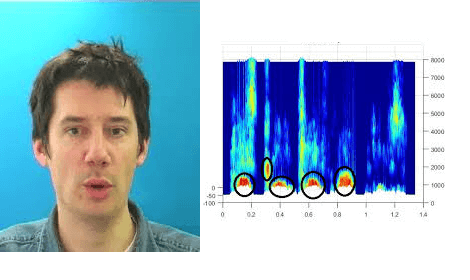
This new
publicly available dataset is based on the benchmark audio-visual GRID
corpus, which was originally developed by our project partners at Sheffield
for
speech perception and automatic speech recognition. The new dataset
contains a range of joint audiovisual vectors, in the form of 2D-DCT visual
features, and the equivalent audio log-filterbank vector. All visual vectors
were
extracted by tracking and cropping the lip region of a range of Grid videos
(1000 videos from five speakers, giving a total of 5000 videos), and then
transforming the region with 2D-DCT. The audio vector was extracted by
windowing the audio signal, and transforming each frame into a
log-filterbank
vector. The visual signal was then interpolated to match the audio, and a
number of large datasets were created, with the frames shuffled randomly to
prevent bias, and with different pairings, including multiple visual frames
to
estimate a single audio frame (from one visual to one audio pairings, to 28
visual to one audio pairings). This dataset will enable researchers to
evaluate
how well audio speech can be estimated using visual information only.
Specifically, the application of novel speech enhancement algorithms
(including those based on advanced machine learning), can be used to
evaluate the potential of exploiting visual cues for speech enhancement.
– ASPIRE dataset https://cogbid.github.io/ASPIRE/#about:
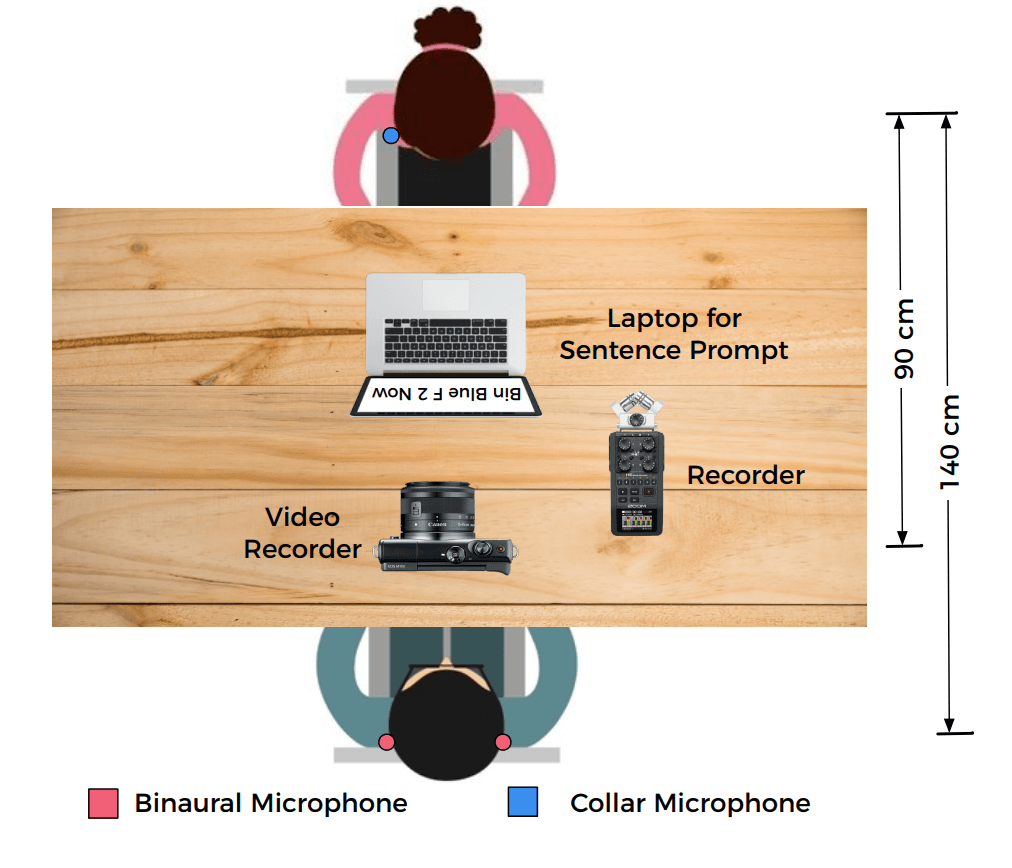
ASPIRE is a a first of its
kind, audiovisual speech corpus recorded in real noisy environment (such as
cafe, restaurants) which can be used to support reliable evaluation of
multi-
modal Speech Filtering technologies. This dataset follows the same sentence
format as the audiovisual Grid corpus.
– First audio-visual (AV)
speech in
real-noise challenge.

A detailed
description of the AV challenge, a novel real noisy AV corpus (ASPIRE),
benchmark speech enhancement task, and baseline performance results are
outlined in [Link]. The latter are based on training a deep neural
architecture
on a synthetic mixture of Grid corpus and ChiME3 noises (consisting of bus,
pedestrian, cafe, and street noises) and testing on the ASPIRE corpus.
Subjective evaluations of five different speech enhancement algorithms
(including SEAGN, spectrum subtraction (SS) , log-minimum mean-square
error (LMMSE), audio-only CochleaNet, and AV CochleaNet) are presented
as baseline results. The aim of the multi-modal challenge is to provide a
timely opportunity for comprehensive evaluation of novel AV speech
enhancement algorithms, using our new benchmark, real-noisy AV corpus
and specified performance metrics. This will promote AV speech processing
research globally, stimulate new ground-breaking multi-modal approaches,
and attract interest from companies, academics and researchers working in
AV speech technologies and applications. We encourage participants
(through a challenge website sign-up) from both the speech and hearing
research communities, to benefit from their complementary approaches to AV
speech in noise processing.
Selected Publications
(2017-2020)
-
- Howard, N., Chouikhi, N., Adeel, A., Dial, K., Howard, A., & Hussain,
A.
(2020). BrainOS: A Novel Artificial Brain-Alike Automatic
Machine
Learning Framework. Frontiers in Computational
Neuroscience,
14,
16. - Ieracitano, C., Adeel, A., Morabito, F. C., & Hussain, A. (2020).
A
novel statistical analysis and autoencoder driven intelligent
intrusion
detection approach. Neurocomputing, 387, 51-62. - Newton Howard, Ahsan Adeel, Mandar Gogate, Amir Hussain, A Novel Highly
Energy-Efficient, Deep Cognitive Neural Network, 2019
(patent
Appl. No. 62/588,210)
Link
-
- Adeel, Ahsan, Mandar Gogate, and Amir Hussain. “Contextual Deep
Learning-based
Audio-Visual Switching for Speech Enhancement in
Real-world
Environments.” Information Fusion (2019).
Link
- Adeel, Ahsan, Mandar Gogate, and Amir Hussain. “Contextual Deep
-
- Ahsan Adeel, Mandar Gogate, Amir Hussain, William M. Whitmer,
Lip-Reading Driven Deep Learning Approach for Speech
Enhancement, IEEE Transactions on Emerging Topics in
Computational
Intelligence, 2019
Link
- Ahsan Adeel, Mandar Gogate, Amir Hussain, William M. Whitmer,
-
- Interactive Prototype Demo: Next-generation Lip-Reading Hearing
Aids: Exploiting the power of contextual Big Data
analytics.
Link
- Interactive Prototype Demo: Next-generation Lip-Reading Hearing
-
- Gogate, Mandar, Kia Dashtipour, Ahsan Adeel, and Amir Hussain,
ASPIRE
dataset, 2019.
Link
- Gogate, Mandar, Kia Dashtipour, Ahsan Adeel, and Amir Hussain,
-
- Ahsan Adeel, Mandar Gogate, Amir Hussain, CHiME3 AV
Corpus,
2019.
Link
- Ahsan Adeel, Mandar Gogate, Amir Hussain, CHiME3 AV
-
- Ahsan Adeel, “Role of Awareness and Universal Context in a
Spiking
Conscious Neural Network: A New Perspective and Future
Directions”,
Frontiers in Neuroscience, 2019 (Submitted, Pre-print available online).
Link
- Ahsan Adeel, “Role of Awareness and Universal Context in a
-
- Gogate, Mandar, Kia Dashtipour, Ahsan Adeel, and Amir Hussain.
“CochleaNet: A Robust Language-independent Audio-Visual
Model
for Speech Enhancement.” arXiv preprint arXiv:1909.10407 (2019).
Link
- Gogate, Mandar, Kia Dashtipour, Ahsan Adeel, and Amir Hussain.
-
- Gogate, Mandar, Kia Dashtipour, Ahsan Adeel, and Amir Hussain,
AV
Speech
Enhancement Challenge using a Real Noisy Corpus, Arxiv,
2019.
Link
- Gogate, Mandar, Kia Dashtipour, Ahsan Adeel, and Amir Hussain,
-
- Cosimo Ieracitano, Ahsan Adeel, Francesco C Morabito, Amir Hussain, A
Statistical Analysis and Autoencoder Driven Intelligent
Intrusion
Detection, Neurocomputing, 2019 (accepted for publication).
- Cosimo Ieracitano, Ahsan Adeel, Francesco C Morabito, Amir Hussain, A
-
- Shibli Nisar, Muhammad Tariq, Ahsan Adeel, Mandar Gogate, Amir Hussain,
Cognitively Inspired Feature Extraction and Speech Recognition for
Automated Hearing Loss Testing, Cognitive Computation,
2019.
- Shibli Nisar, Muhammad Tariq, Ahsan Adeel, Mandar Gogate, Amir Hussain,
-
- Ozturk, Metin, Mandar Gogate, Oluwakayode Onireti, Ahsan Adeel, Amir
Hussain,
and Muhammad A. Imran. “A novel deep learning driven low-cost
mobility
prediction approach for 5G cellular networks: The case of
the
Control/Data Separation Architecture (CDSA).” Neurocomputing, 2019.
Link
- Ozturk, Metin, Mandar Gogate, Oluwakayode Onireti, Ahsan Adeel, Amir
-
- Ahsan Adeel, et al. “A Survey on the Role of Wireless Sensor Networks
and
IoT in Disaster Management.” Geological Disaster
Monitoring
Based on Sensor Networks, Springer, Singapore, 2019.
Link
- Ahsan Adeel, et al. “A Survey on the Role of Wireless Sensor Networks
-
- Ahsan Adeel, Jawad Ahmed, Amir Hussain, Real-Time Lightweight Chaotic
Encryption
for 5G IoT Enabled Lip-Reading Driven Hearing-Aid,
Cognitive
Computation, 2018 (accepted for publication/available online) Link - Ahsan Adeel, Hadi Larijani, and Ali Ahmadinia. “Random neural
network
based cognitive engines for adaptive modulation and coding
in
LTE
downlink systems.” Computers & Electrical Engineering, 2017. - Ahsan Adeel, Hadi Larijani, and Ali Ahmadinia. “Random neural network
based
novel decision making framework for optimized and autonomous
power
control in LTE uplink system.” Elsevier Physical
Communication. - Ahsan Adeel, Hadi Larijani, and Ali Ahmadinia. “Resource
management
and
inter-cell-interference coordination in lte uplink system
using
random neural network and optimization.” IEEE Access
Cognitive
Networking, (published). - Ahsan Adeel, H. Larijani, A. Ahmadinia, Impact of Learning
Algorithms on
Random Neural Network based Optimization for LTE-UL
Systems,
Network Protocols, Special Issue on Software Defined and Cognitive
Networks. - Cosimo Ieracitano, Ahsan Adeel, Mandar Gogate, Kia Dashtipour, Francesco
Carlo
Morabito, Hadi Larijani, Ali Raza, Amir Hussain, Statistical
Analysis
Driven Optimized Deep Learning System for Intrusion
Detection,
BICS
2018 - Kia Dashtipour, Mandar Gogate, Ahsan Adeel, Cosimo Ieracitano, Hadi
Larijani,
Amir Hussain, Exploiting Deep Learning for Persian Sentiment
Analysis, BICS 2018
Imane Guellil, Ahsan Adeel, SentiALG: Automated Corpus
Annotation
for
Algerian Sentiment Analysis, BICS 2018 - Fengling Jiang, Bin Kong, Ahsan Adeel, Saliency Detection via
Bidirectional Absorbing Markov Chain, BICS 2018 - Gogate, Mandar, Ahsan Adeel, Ricard Marxer, Jon Barker, and Amir
Hussain.
“DNN
driven Speaker Independent Audio-Visual Mask Estimation
for
Speech Separation, INTERSPEECH, 2018 - GUELLIL, Imane, Ahsan Adeel,”Arabizi sentiment analysis
based
on transliteration and automatic corpus annotation.” 9th Workshop on
Computational Approaches to Subjectivity, Sentiment and Social Media
Analysis,
pp. 335-341. 2018. - Ahsan Adeel, Mandar Gogate, Amir Hussain, Towards Next-Generation
Lip-Reading
Driven Hearing-Aids: A preliminary Prototype Demo,
CHAT,
INTERSPEECH, 2017 - Hussain, A., Barker, J., Marxer, R., Adeel, A., Whitmer, W., Watt, R.,
&
Derleth, P. Towards Multi-modal Hearing Aid Design and
Evaluation in Realistic Audio-Visual Settings: Challenges and
Opportunities, CHAT, INTERSPEECH, 2017 - Mandar Gogate, Ahsan Adeel and Amir Hussain, A novel brain-inspired
compression-based optimised multimodal fusion for emotion
recognition, IEEE Symposium Series on Computational
Intelligence,
SSCI 2017 - Kia Dashtipour, Mandar Gogate, Ahsan Adeel, Amir Hussain, Persian Named
Entity
Recognition, IEEE ICCIC, 2017 - Mandar Gogate, Ahsan Adeel and Amir Hussain, Deep Learning Driven
Multimodal Fusion For Automated Deception Detection,
IEEE
Symposium Series on Computational Intelligence, SSCI 2017
- Ahsan Adeel, Jawad Ahmed, Amir Hussain, Real-Time Lightweight Chaotic
Ahsan Adeel
Email: ahsan.adeel@deepci.org