
Architecture
Toward 21st-Century Cellular Neurobiology-Inspired AI
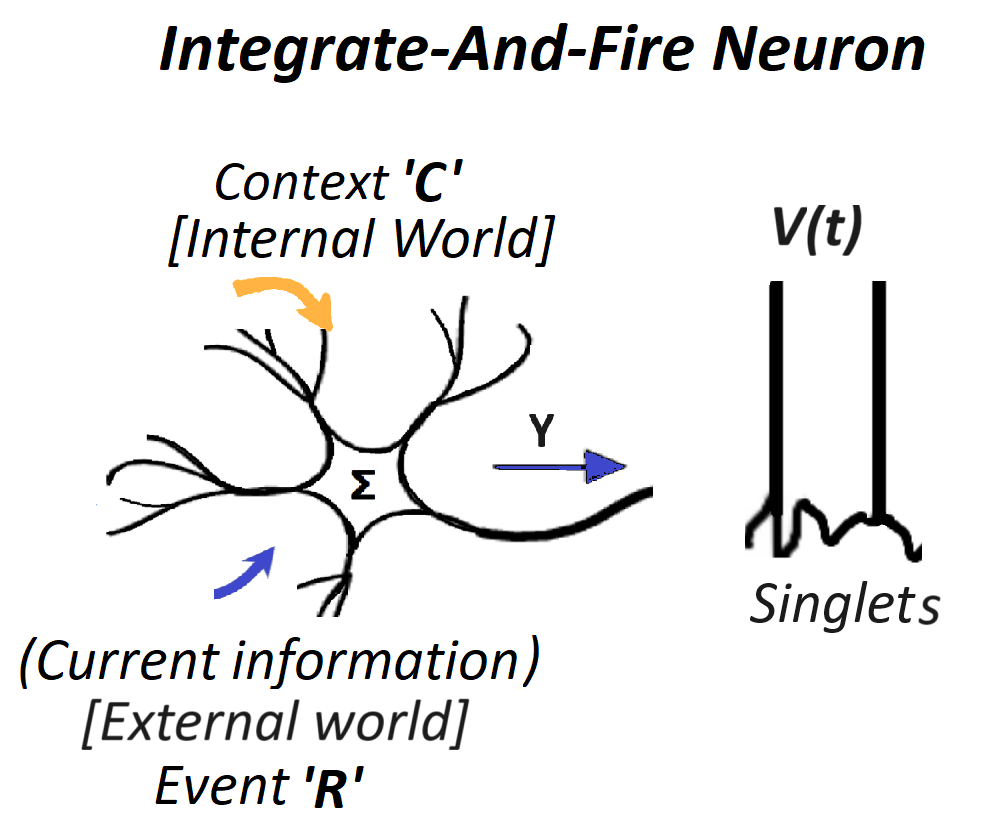
The brain is made up of billions of neurons, each receiving input from thousands of other neurons. In the 20th century, neurally inspired AI researchers assumed that neurons summed all their inputs to generate an output — a concept known as point neurons (PNs) (Hausser, 2001, Current Biology), on which most current brain theories and AI systems are based (LeCun, 2015, Nature).
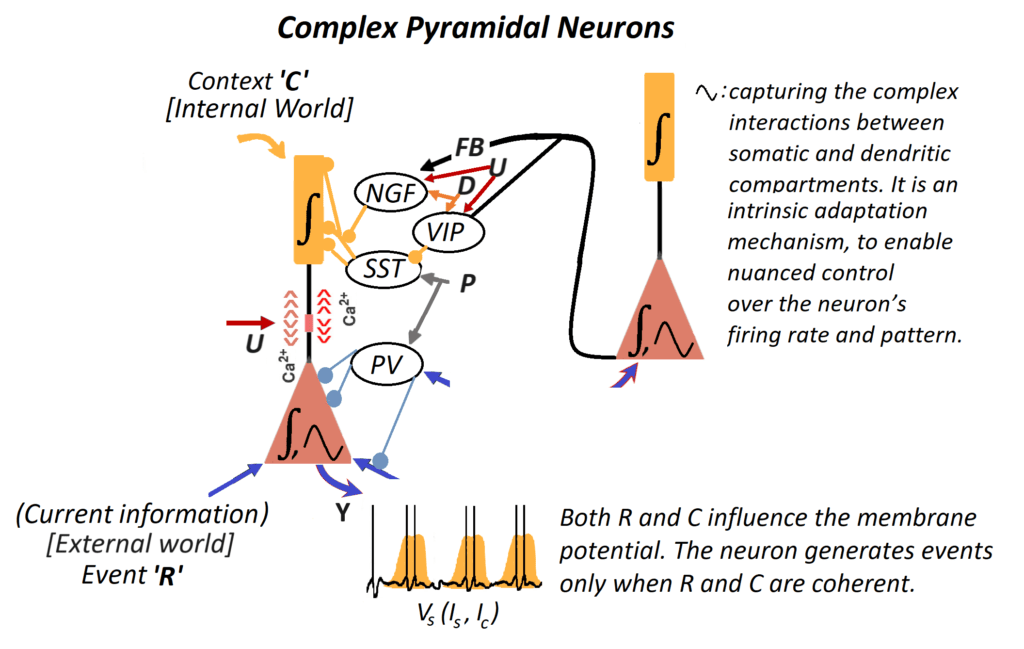
Recent cellular neurobiology (Larkum, 1999, Nature; Phillips, 2024, Trends in Cognitive Sciences; Marvan, 2024, Current Research in Neurobiology) and highly detailed modeling (Graham, 2025, Neural Computation) reveal how pyramidal two-point neurons (TPNs) in the mammalian neocortex minimize predictive error by amplifying the output when both receptive field (RF) input and contextual field (CF) input are activated, arriving at the basal and apical dendrites, respectively. Specifically, these neurons burst, i.e., fire briefly at high frequency, when both basal and apical compartments are simultaneously depolarized, signaling a match between context and input.
Four modes within the operation of neocortical pyramidal neurons include: (1) slow-wave (SW) sleep, or apical isolation (AI); (2) apical amplification (AA), supporting perception while largely excluding internally generated thought; (3) Rapid Eye Movement (REM) sleep and imaginative cognition during wakefulness, termed apical drive (AD); and (4) grounded imagination (AD + Awake).
Operations of neocortical pyramidal neurons in distinct mental states
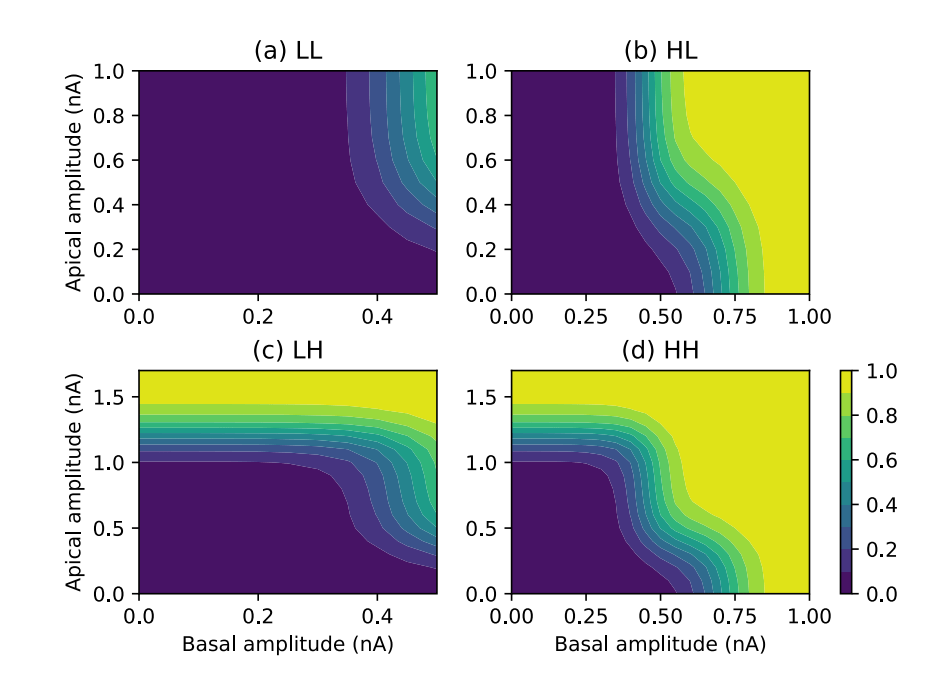
(1) During slow-wave (SW) sleep (LL region), or apical isolation (AI), bursting probability is minimal, as bursts occur only when RF and CF inputs coincide; in this regime, apical input exerts no independent influence on neuronal output. (2) During apical amplification (AA) (HL region), moderate to high CF input typically amplifies FF transmission, resulting in a medium-to-high bursting probability. This cooperative, context-sensitive amplification supports perception while largely excluding internally generated thought. (3) When apical input is sufficiently strong, it can independently drive axonal output, during Rapid Eye Movement (REM) sleep and imaginative cognition during wakefulness, termed apical drive (AD) (LH region), characterized by a high bursting probability. (4) When both apical and basal inputs are strong, the neuron enters a state associated with grounded imagination (AD + Awake) (HH region), where bursting probability is maximal.